TL;DR
Vulnerability scanners identify weaknesses, but they do not show which ones pose real risk. By ingesting vulnerability scanner data into a SIEM, security teams can correlate vulnerabilities with asset criticality, exposure, threat intelligence, and live security activity. This correlation enables risk-based prioritization, faster remediation, and stronger protection against active threats.
Why Vulnerability Scanner Data Alone Is Not Enough
Vulnerability scanners are a critical part of modern cybersecurity programs. They continuously identify missing patches, outdated software, and configuration weaknesses across endpoints, servers, cloud workloads, and network devices. The challenge is volume.
Most organizations uncover thousands of vulnerabilities during each scan cycle. While severity scores help categorize findings, they do not reflect how attackers operate in the real world. A critical vulnerability on a test server may represent minimal risk, while a moderate vulnerability on an internet-facing system could provide immediate access for an attacker.
Without additional context, security teams are forced to prioritize remediation based on static scores rather than actual exposure. This leads to patching inefficiencies, remediation fatigue, and vulnerabilities remaining open longer than they should.
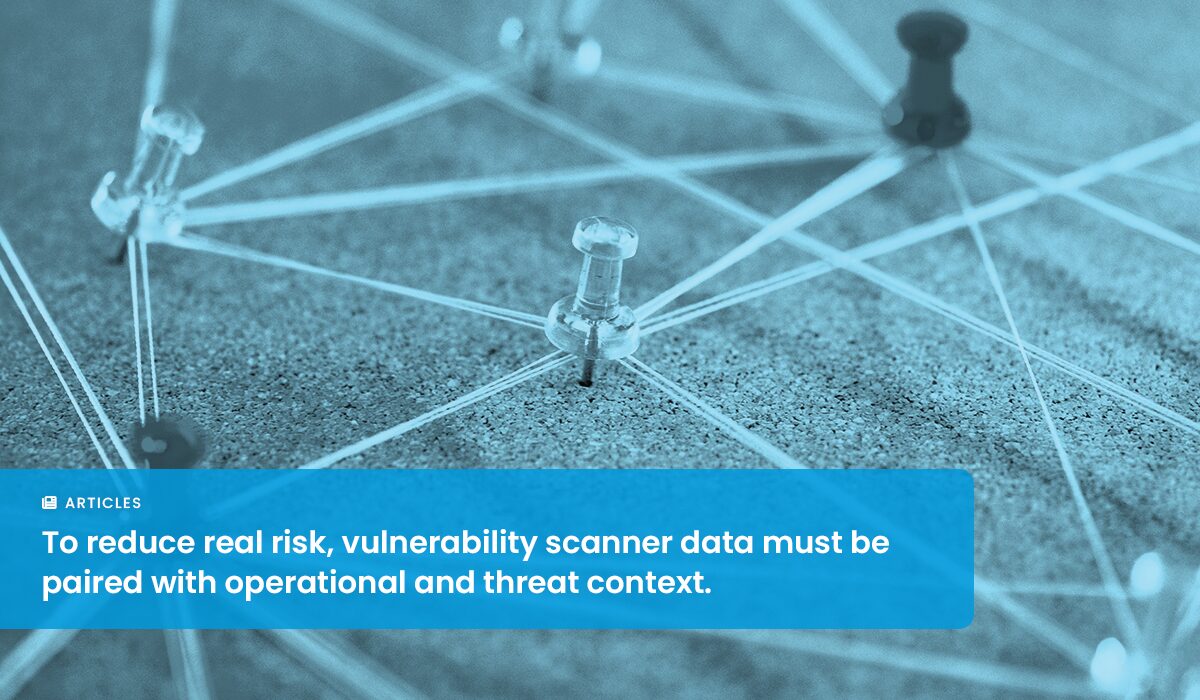
To reduce real risk, vulnerability data must be paired with operational and threat context.
What is a SIEM? How Does It Improve Vulnerability Management?
A Security Information and Event Management platform serves as the central system for security operations. SIEM collects telemetry from across the environment and correlates it into a unified view of activity. This includes data from endpoints, firewalls, identity platforms, cloud services, and vulnerability scanners.
When vulnerability scanner data is ingested into the SIEM, it stops being a disconnected report and becomes part of an active security workflow. Findings are automatically linked to affected assets, exposure paths, and live security events. This enables organizations to move from vulnerability management to exposure-based risk management.
Vulnerability Scanner Integrations That Enable Correlation
A modern SIEM is built to integrate directly with leading vulnerability scanning tools such as Rapid7, Qualys, and Tenable. These integrations allow vulnerability findings to be ingested automatically and normalized within the SIEM. Security teams gain centralized visibility into vulnerabilities alongside authentication logs, network traffic, endpoint activity, and cloud telemetry. By eliminating data silos, SIEM provides a complete picture of which assets are vulnerable and how those vulnerabilities intersect with real security activity.
How Do SIEM Platforms Correlate Vulnerability Scanner Data To Prioritize Real Threats?
Correlation is what transforms vulnerability data into meaningful intelligence. SIEM first applies asset context, identifying which vulnerabilities affect business-critical systems, production servers, or sensitive workloads. This ensures remediation efforts focus on assets that would have the greatest operational impact if compromised.
Next, exposure analysis determines whether vulnerable systems are externally accessible or reachable through lateral movement. Vulnerabilities on exposed assets represent significantly higher risk than those isolated behind multiple controls.
Threat intelligence adds further prioritization. SIEM correlates vulnerabilities with known exploits, ransomware campaigns, and attacker tooling to highlight weaknesses actively targeted in the wild.
Finally, real-time event correlation connects vulnerabilities directly to observed behavior. When exploit attempts, suspicious logins, or malware execution occur on vulnerable systems, SIEM surfaces these relationships immediately, enabling rapid investigation and response. Together, these layers provide clarity on which vulnerabilities require immediate action and which pose minimal risk.
The Operational Impact of Vulnerability Correlation
When vulnerability scanner data is correlated within the SIEM, security operations become more efficient and more effective. Security teams spend less time reviewing long vulnerability lists and more time addressing exposures that could realistically lead to compromise. Remediation becomes prioritized and measurable, reducing mean time to patch and improving overall security posture.
This approach also improves collaboration between security and IT teams. Instead of delivering raw scan output, security teams can provide targeted remediation guidance supported by exposure and threat context. Over time, organizations gain visibility into vulnerability trends, recurring weaknesses, and the effectiveness of remediation strategies.
Why is Vulnerability Correlation Essential for Modern Security Operations?
Attackers do not exploit every vulnerability. They focus on weaknesses that provide reliable entry points and fast paths to escalation. Organizations that rely solely on scanner data struggle to keep pace because they lack insight into how vulnerabilities interact with their real attack surface. SIEM correlation closes this gap by continuously evaluating vulnerabilities against live threat activity and environmental exposure. This enables proactive risk reduction rather than reactive incident response.
See Vulnerability Correlation in Action with ArmorPoint Managed SIEM
Vulnerability scanners show where weaknesses exist. SIEM reveals which ones matter most. ArmorPoint’s Managed SIEM platform centralizes vulnerability scanner data, security telemetry, and threat intelligence into a single, correlated view of risk. Our platform helps organizations prioritize real threats, reduce exposure, and respond faster with expert-backed monitoring and analysis.
Request a demo of the ArmorPoint Managed SIEM platform to see how vulnerability correlation works in real-world security operations.