TL;DR
Manufacturers are increasingly targeted by ransomware, supply chain attacks, and industrial system exploits that threaten productivity and safety. Proactive defenses, including network segmentation and OT-specific threat monitoring, are essential to mitigate these risks.
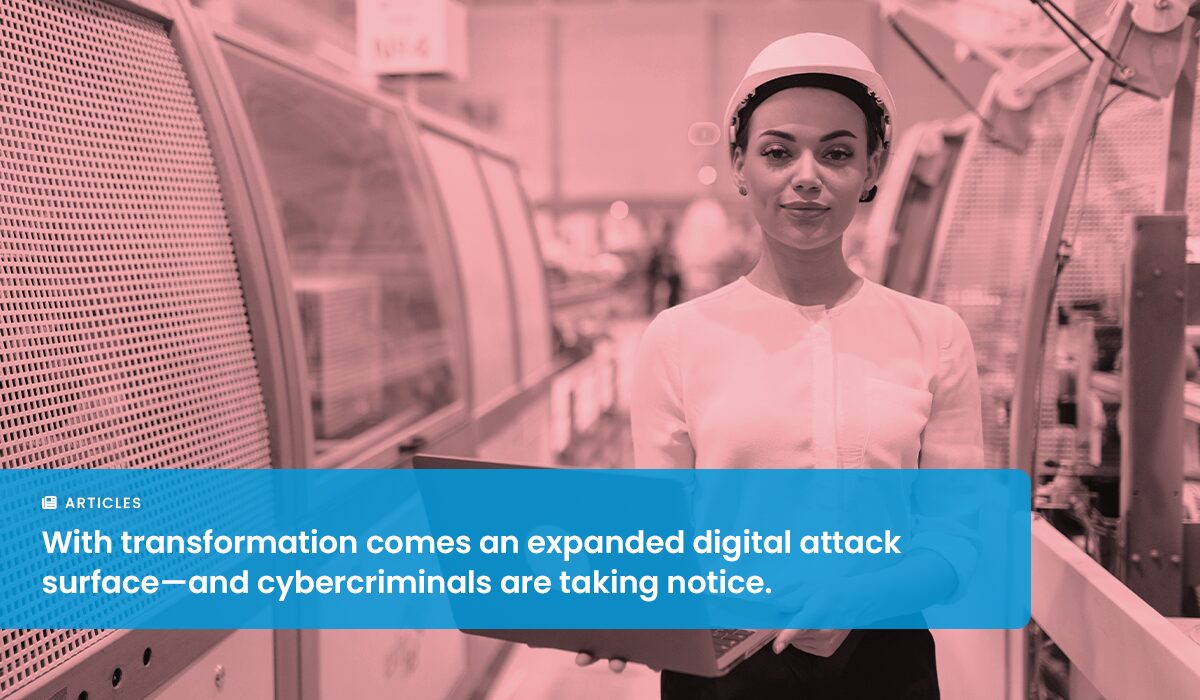
The manufacturing industry is undergoing a massive transformation. Smart factories, automation, industrial IoT, and real-time data are fueling efficiency and innovation. But with that progress comes an expanded digital attack surface, and cybercriminals are taking notice.
Why is Manufacturing a Prime Target for Cyber Attacks?
Cybercriminals are drawn to manufacturing because of a unique combination of factors: outdated systems, high-value assets, and a strong incentive to pay ransoms quickly due to operational downtime.
Legacy OT Systems and Poor Security Hygiene
Many manufacturers still rely on aging operational technology (OT) systems that were designed for safety and performance, not security. These systems often run outdated software and cannot be easily patched without causing production downtime.
Interconnected IT/OT Environments Without Segmentation
The convergence of IT and OT has brought greater visibility and efficiency but also introduced new risks. Without proper network segmentation, a breach in IT (such as a phishing attack) can quickly jump to OT environments, where the consequences are more severe.
Limited Security Resources or Monitoring
Security teams in manufacturing environments are often small or non-existent. Many organizations lack 24/7 threat detection or incident response capabilities, making it easier for attackers to operate undetected.
Free Guide: How Manufacturers Stay Protected Without Disrupting Production
Get the GuideHigh-Value Intellectual Property
Manufacturers store sensitive data such as product blueprints, prototypes, industrial processes, and trade secrets. This information is extremely valuable to nation-state actors, competitors, and cybercriminals looking to profit from espionage or data extortion.
Pressure to Maintain Uptime
In manufacturing, every minute of downtime equals lost revenue. This urgency makes manufacturers more likely to pay ransoms quickly to restore operations, making them a more attractive target for financially motivated threat actors.
Top Cybersecurity Threats in Manufacturing
1. Ransomware Attacks
Ransomware continues to be one of the most devastating threats for manufacturers. Cybercriminals encrypt files or entire systems and demand payment for the decryption key. These attacks can completely halt production lines, compromise sensitive data, and take days or weeks to recover from.
High-profile incidents like NotPetya and LockerGoga have shown just how disruptive ransomware can be in industrial settings. These attacks often target OT systems, knowing that the financial and operational pressure will prompt victims to pay quickly.
2. Phishing and Business Email Compromise (BEC)
Email remains a top attack vector. In phishing campaigns, attackers use deceptive emails to trick employees into clicking malicious links or providing credentials. Business email compromise goes a step further, with attackers impersonating vendors, executives, or suppliers to redirect wire transfers or gain access to sensitive systems. These attacks are particularly effective in manufacturing due to the frequent communication between teams, partners, and supply chain vendors.
3. Intellectual Property (IP) Theft
Some attackers aren’t looking to disrupt operations; they’re after trade secrets. IP theft is often carried out by sophisticated, persistent attackers who quietly exfiltrate proprietary designs, formulas, or production data. This type of cyber espionage can cost millions in lost competitive advantage and takes longer to detect because there’s often no immediate disruption.
4. Supply Chain Attacks
Manufacturers rely on a web of third-party vendors and service providers. Attackers exploit these relationships to gain indirect access to the manufacturer’s environment. A compromised supplier or software provider can unknowingly serve as a backdoor into the network. These attacks are challenging to prevent because they abuse trusted connections and often remain invisible until damage is done.
5. Insider Threats
Not all threats come from outside. Insiders, whether disgruntled employees, careless contractors, or third-party vendors, can cause significant harm. Sometimes it's intentional sabotage. Other times, it's an employee clicking a phishing link or using weak passwords. Without adequate access controls, activity monitoring, and training, insider threats can easily go unnoticed until it's too late.
6. Unpatched Systems and Legacy OT Devices
Legacy systems are common in manufacturing and often can’t be patched without downtime or may no longer be supported. These unpatched systems create vulnerabilities that attackers can exploit with minimal effort, especially if they’re exposed to the internet or connected to IT systems.
7. IoT Device Vulnerabilities
Manufacturers increasingly depend on smart sensors, cameras, and machinery that connect to the internet. Many of these IoT devices lack strong security controls, ship with default credentials, or aren’t regularly monitored. Each new connected device becomes a potential entry point for attackers, especially when there’s little visibility or centralized management.
The Business Impact of Cyber Threats in Manufacturing
Cyber threats in manufacturing are more than just IT issues. They create real business consequences:
- Downtime and Disruption: Cyberattacks can bring production lines to a halt, costing thousands or even millions in lost productivity and revenue.
- Reputational Damage: Clients and partners may question your reliability or ability to protect sensitive information.
- Compliance Violations: Failing to secure your environment can result in violations of regulations like NIST, ISO 27001, or CMMC, especially for manufacturers involved in defense or critical infrastructure.
- Costly Recovery: Recovery efforts may include incident response consultants, ransom payments, legal fees, customer notifications, and system rebuilding. The average cost of a ransomware attack in manufacturing continues to rise each year.
How Manufacturers Can Strengthen Their Cybersecurity
A proactive approach to cybersecurity can help manufacturers reduce risk and increase resilience. Here are some critical steps:
- Perform Regular Risk Assessments: Evaluate your IT and OT environments to identify vulnerabilities and prioritize fixes based on risk.
- Segment Networks: Isolate OT systems from IT environments to prevent lateral movement during an attack.
- Invest in 24/7 Monitoring and Response: Managed SOC services provide continuous threat monitoring, real-time alerts, and expert response.
- Keep Systems Patched: Establish a patch management process for all supported systems, including software, firmware, and IoT devices.
- Educate Employees: Implement ongoing security awareness training to help employees recognize phishing and other common attacks.
- Plan for Incidents: Build an incident response plan, test it regularly, and include both IT and OT stakeholders in the process.
Conclusion
The manufacturing industry faces some of the most complex cybersecurity challenges of any sector. The combination of legacy infrastructure, high-value data, and an increasing reliance on digital technologies makes manufacturers an appealing target, and the consequences of an attack can be severe. Understanding your specific risks and building a strong cybersecurity foundation is essential to protect your people, your production, and your intellectual property.
Want to see how ArmorPoint can help you stay secure against these top cybersecurity threats in manufacturing? Request a demo today to learn how our Managed SOC services delivers the 24/7 monitoring, advanced detection, and expert response needed to defend against modern threats.