TL;DR
Log management focuses on the collection and storage of log data, while log analysis interprets that data to detect threats and investigate incidents. Together, they provide the visibility and context necessary for effective cybersecurity operations.
In today’s digital environment, every login, file transfer, or network event generates log data. These logs are crucial for detecting threats, investigating incidents, and staying compliant with cybersecurity regulations. However, collecting logs is not enough.
Log management forms the foundation of visibility, threat detection, and compliance. But without log analysis, organizations cannot transform that data into actionable security intelligence. Many teams confuse the two, but understanding the difference is essential to building a strong security operations center (SOC) and making informed decisions about tools and services.
What is Log Management?
Log management is the practice of collecting, storing, organizing, and maintaining log data from across your IT infrastructure. It enables your team to access the data needed to detect threats, investigate issues, and meet regulatory compliance requirements.
Common Sources of Log Data
- Firewalls, routers, and switches
- Web and application servers
- Operating systems
- Cloud environments (AWS, Azure, Google Cloud)
- SaaS applications
- Endpoints such as laptops, desktops, and mobile devices
Core Functions of Log Management
- Collection: Aggregating logs from various devices and platforms.
- Centralization: Sending all logs to a unified, searchable platform such as a SIEM or log management tool.
- Retention and Archiving: Storing logs for defined periods to meet regulatory and business requirements.
- Access Control: Limiting who can view, manage, and analyze log data.
- Search and Indexing: Making it easy to query and filter logs for real-time and historical analysis.
With the growing complexity of IT environments, effective log management ensures your data is not just collected but properly handled and readily available when needed.
The Role of Log Management in Security Operations
Log management is critical to the success of any modern SOC. It provides the foundation for everything from incident detection to compliance audits.
Here are a few key roles log management plays in cybersecurity:
- Enables Threat Detection: Security teams rely on centralized log data to spot suspicious activity and alert on potential threats.
- Supports Incident Response: Logs provide historical context and evidence needed during investigations and response efforts.
- Meets Compliance Requirements: Regulations like PCI DSS, HIPAA, and CMMC require detailed logging and long-term data retention.
- Assists with Troubleshooting and Uptime Monitoring: Logs also help IT teams identify performance issues and system failures.
Without proper log management, your SOC cannot function efficiently, and your organization remains at greater risk of undetected security incidents.
Log Management vs. Log Analysis: What’s the Difference?
While closely related, log management and log analysis play distinct roles in an effective cybersecurity strategy. Log management focuses on storing, organizing, and maintaining log data, using tools like log collectors, storage platforms, and SIEM systems. It is primarily used by IT administrators and compliance officers to ensure data availability, long-term retention, and regulatory compliance.
In contrast, log analysis is the process of interpreting that data to detect, investigate, and respond to threats. Security analysts, incident responders, and SOC engineers rely on SIEM tools and advanced analytics platforms to turn raw logs into actionable insights. In simple terms, log management ensures the right data is available, while log analysis transforms that data into security intelligence. Both are essential, though. Without proper management, analysis becomes impossible, and without analysis, log data remains underutilized and ineffective for threat detection.
How ArmorPoint Simplifies Log Management and Analysis
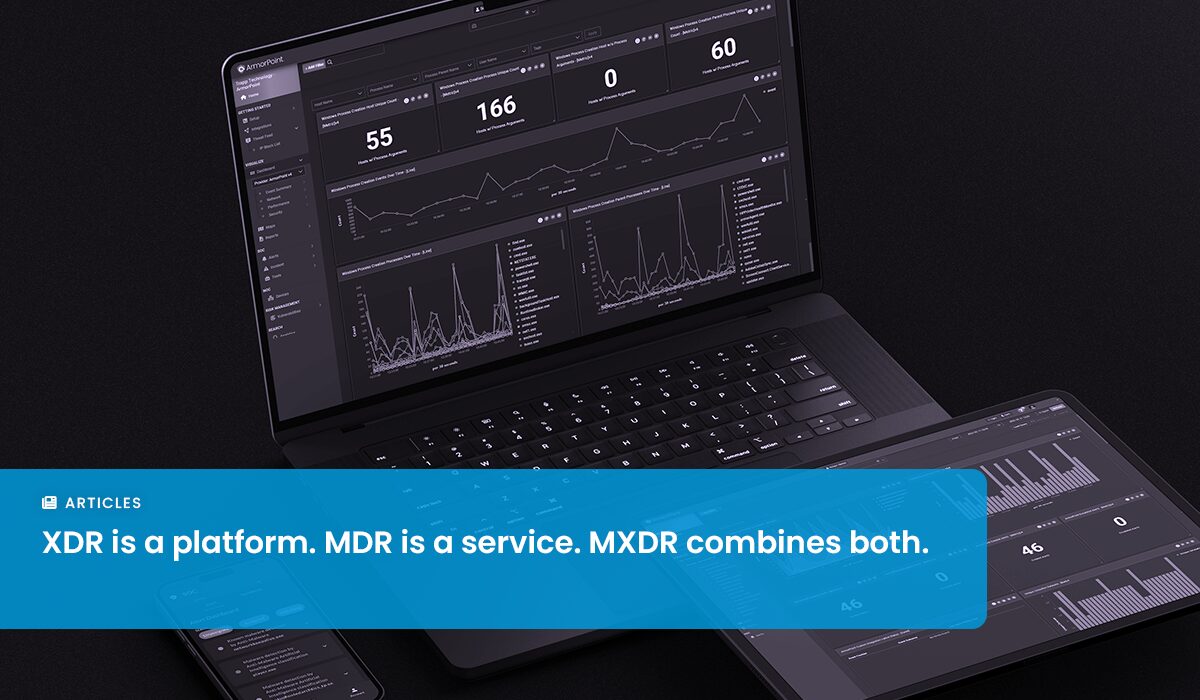
Whether you are managing security internally or looking for an outsourced SOC, ArmorPoint delivers a powerful managed SOC platform that handles log management and analysis in one integrated solution.
Key Capabilities of ArmorPoint Managed SOC
- Seamless Log Ingestion: Connects to all major log sources including endpoints, cloud services, firewalls, and more.
- Cloud-Based Centralization: Stores logs securely in a centralized platform with high scalability.
- Built-In Compliance Tools: Helps your organization meet requirements for frameworks such as PCI DSS, HIPAA, and NIST CSF.
- Real-Time Search and Filtering: Quickly locate and analyze logs using intuitive tools.
- Integrated Threat Detection: Uses log analysis to detect anomalies, alert on potential incidents, and automate response efforts.
ArmorPoint bridges the gap between log management and log analysis, providing end-to-end visibility and faster incident detection. For IT and security teams, this means reduced manual effort, improved compliance, and faster response to threats.
Conclusion
Strong cybersecurity starts with strong visibility. Log management provides the structure and access, while log analysis delivers the insights. When combined, they form the backbone of an effective cybersecurity strategy.
ArmorPoint’s Managed SOC service brings both together in a unified platform, helping your team improve security operations without the overhead. Whether you are considering an outsourced SOC or looking to scale your internal team’s capabilities, book a demo today to see how ArmorPoint can help your organization streamline log management and boost cyber resilience.