TL;DR
K‑12 institutions face increasing cyberattacks due to outdated infrastructure, limited resources, and lack of dedicated security teams. Implementing Managed SOC services, access controls, and cybersecurity training can significantly reduce exposure and improve compliance.
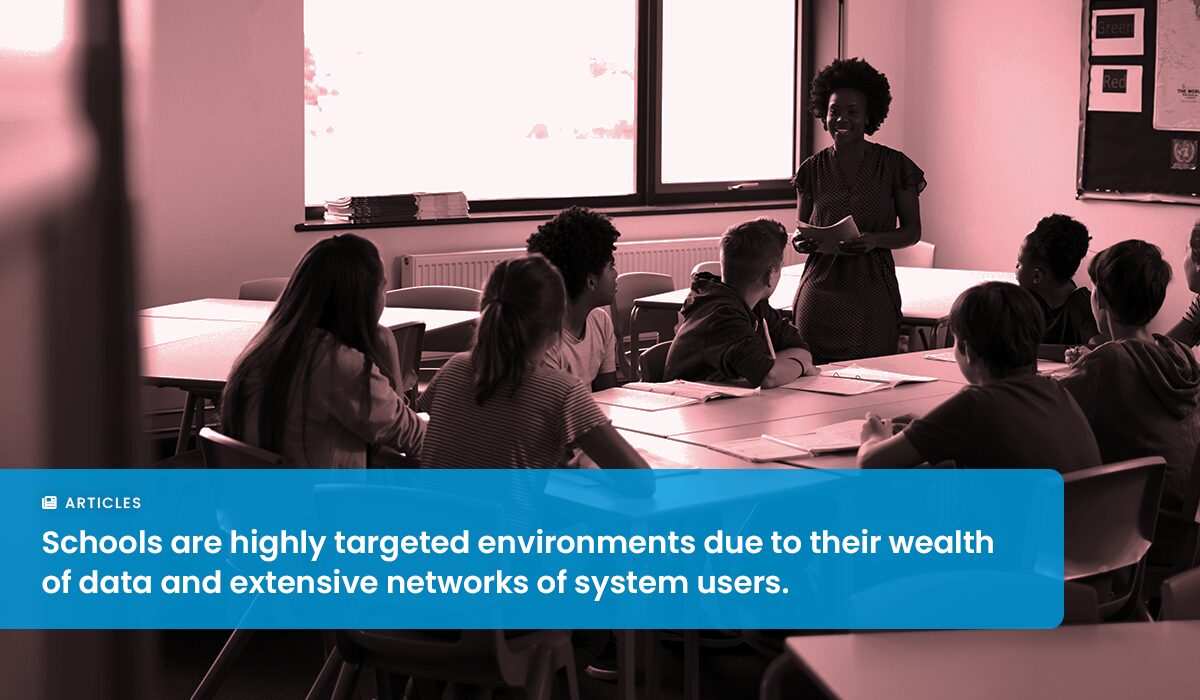
Despite a common misconception among K-12 schools and their districts is that they are not on the radar of threat actors, the reality tells a different story. Schools are, in fact, highly targeted environments due to their wealth of data and extensive networks of system users. According to the Cybersecurity and Infrastructure Security Agency (CISA), the average school experiences more than one cyber incident per school day. These incidents pose severe risks, not only jeopardizing the safety of students and staff but also threatening the very continuity of educational services. From losing critical student data to facing days of instructional downtime, the impacts are far-reaching. For instance…

Top 6 K-12 Cybersecurity Threats
Schools encounter numerous cybersecurity challenges that threaten their operational integrity and data security. The top six K-12 cybersecurity threats include the following:
1. Unauthorized Disclosure & Data Breach
Sensitive data such as student and faculty personal information, academic records, and financial information are prime targets for cybercriminals. Unauthorized access can occur through hacking, poor data handling practices, or even through insider threats, leading to significant legal and reputational consequences.
2. Phishing & Social Engineering
These tactics involve manipulating individuals into providing confidential information or performing actions that compromise security. For instance, an attacker might impersonate a school official or a commonly used vendor to trick an employee into clicking a malicious link or divulging login credentials.
3. Ransomware & Malware
Ransomware locks users out of their systems by encrypting files and demanding a ransom for their release. Malware can similarly infiltrate systems to disrupt operations, steal data, or both. Schools often find themselves at risk due to outdated security systems or lack of employee training in recognizing suspicious links or attachments.
4. Denial-of-Service (DoS) Attacks
These attacks aim to make network resources unavailable to users by overwhelming the system with traffic. This can shut down websites, online learning platforms, and other digital resources essential for day-to-day operations, disrupting educational processes.
Free Guide: How Schools and Universities Can Strengthen Detection, Response, and Resilience
Get the Guide5. Weak Credentials
The use of weak or default passwords makes unauthorized access easier for attackers. Regularly enforcing strong password policies and using multi-factor authentication can mitigate this risk.
6. Advanced Persistent Threats (APT)
These involve continuous, stealthy, and complex hacking processes aimed at gaining valuable information over long periods. APTs target high-value data and can evade detection with sophisticated techniques, making them particularly dangerous for schools with significant research projects or extensive student databases.
Top Security Concerns by EdTech Leaders at K-12 Institutions
As K-12 educational leaders navigate the threats facing their schools and districts, several pressing concerns dominate their strategic planning and resource allocation.
Insufficient Funding
A predominant issue in many districts is the stark lack of financial resources dedicated to cybersecurity. This shortage affects the ability to procure advanced security technologies, implement effective cyber defense measures, and train staff adequately. Many schools struggle to upgrade outdated systems or employ sufficient IT staff, leaving them vulnerable to cyberattacks.
Escalating Threat Sophistication
Cyber threats are becoming increasingly complex and adaptive, making them harder to detect and mitigate. Attackers continuously develop new techniques to bypass traditional security measures, exploiting everything from cloud services to IoT devices within educational environments. This escalation requires schools to constantly update their security practices and tools, a challenge that is often hard to meet without extensive resources.
Absence of Documented Processes
Many educational institutions lack formalized cybersecurity policies and incident response plans. This absence can lead to inconsistent handling of security breaches and inadequate preparation for potential threats. Without clear guidelines, staff may not understand their roles in maintaining cybersecurity, leading to gaps in defensive measures.
Lack of a Comprehensive Cybersecurity Strategy
Fragmented approaches to cybersecurity often result in significant vulnerabilities. A comprehensive cybersecurity strategy should integrate network security, user education, endpoint protection, and data privacy into a cohesive framework. Without this, schools may find themselves reacting to threats in an ad hoc manner, rather than proactively managing risks.
Shortage of Cybersecurity Expertise
There is a critical nationwide shortage of skilled cybersecurity professionals, and the education industry often competes with higher-paying industries for this limited talent pool. This expertise gap means that many schools do not have access to the necessary skills to adequately protect their systems and data, nor can they often afford to provide ongoing training for their existing IT staff to keep up with the latest security trends and technologies.
Overcoming K-12 Cybersecurity Threats & Concerns with ArmorPoint Managed SOC
In response to these complex challenges, ArmorPoint’s Managed SOC services provide a comprehensive, cost-effective solution tailored to the unique needs of K-12 institutions. ArmorPoint offers:
- Cost-Effectiveness: With budget constraints a common challenge, ArmorPoint provides an affordable managed service model that reduces the need for extensive internal cybersecurity teams and lowers overall security maintenance costs.
- Customized Security Solutions: ArmorPoint tailors its services to meet the unique needs and risk profiles of each school district, ensuring optimal alignment with specific operational requirements.
- Comprehensive Protection: Offering comprehensive protection, ArmorPoint Managed SOC services covers you, from real-time threat detection to advanced risk management and compliance support.
- Expertise and Experience: Our team of cybersecurity experts brings deep knowledge and experience, offering a level of expertise that enhances your school’s security posture beyond what internal resources might achieve.
- Seamless Integration: While educational institutions often have access to cybersecurity tools like CrowdStrike, Microsoft Defender, and SentinelOne at low or no cost, these tools alone may not meet the full spectrum of your security needs. ArmorPoint is designed for easy integration with existing IT infrastructures, ensuring smooth implementation and minimal operational disruption.
- Proactive Monitoring and Rapid Response: Operating 24/7, ArmorPoint’s monitoring and incident response capabilities prevent attacks and minimize the impact of any security breaches, enhancing overall school safety.
- Regulatory Compliance: ArmorPoint helps navigate and exceed compliance with educational data regulations, mitigating risks of legal or financial penalties.
By partnering with ArmorPoint for Managed SOC services, K-12 institutions can achieve a level of cybersecurity readiness and resilience that supports their educational goals while protecting the welfare of their students and staff.
Conclusion
The path to robust cybersecurity in K-12 education is complex and requires ongoing effort and attention. By understanding the landscape, recognizing the threats, and implementing strategic solutions, educational leaders can significantly enhance their institutions' cybersecurity defenses.
Ready to elevate your school district’s cybersecurity? Explore our Managed SOC services today.