
Security Operations Center (SOC) analysts shoulder the critical responsibility of monitoring and responding to security alerts around the clock. However, this continuous vigilance often leads to a pervasive issue known as alert fatigue, which can significantly impair an organization's defensive capabilities.
What is Alert Fatigue?
Alert fatigue occurs when SOC analysts become overwhelmed by the sheer volume of alerts, many of which are false positives. This overload not only diminishes their ability to pinpoint real threats but slows response times and heightens their stress levels. Picture the challenge of sifting through hundreds of daily alarms to identify the critical few—it's like searching for a needle in an ever-expanding haystack.
How to Recognize Alert Fatigue in SOC Analysts?
Common symptoms of alert fatigue include decreased attention to alerts, an increase in missed detections, and a growing cynicism towards the significance of new alerts. These signs indicate not only a decline in the morale of the analysts but also pose a significant risk to the entire organization, as genuine threats may go unnoticed amidst the overwhelming flood of alerts. Alarmingly, about 71% of SOC practitioners express concern weekly that they might overlook a real attack buried under the multitude of false alarms. Recognizing these symptoms early is essential for taking corrective actions and safeguarding your organization’s security posture.
What Contributes to Alert Fatigue?
So, what contributes to alert fatigue? Several factors, including:
- High Volume of False Positives: Security tools often err on the side of caution, triggering a high volume of false alarms. On average, SOC teams are inundated with 3,832 alerts daily. Notably, about 62% of these alerts are ultimately ignored due to their irrelevance, contributing significantly to analyst overload.
- Complexity of Threats: The evolving sophistication of cyber threats complicates the differentiation between benign and malicious activities. This complexity increases the difficulty of accurately identifying true threats amidst numerous alerts.
- Inadequate Tools and Processes: About 50% of SOC practitioners report that their security tools do more to hinder than help, obstructing effective threat detection. The lack of efficient tools and streamlined processes forces analysts to spend considerable time on manual triage and investigation, adding to their workload.
- Continuous Monitoring Demands: The relentless requirement for 24/7 monitoring without adequate breaks or support places additional stress on SOC teams. Over half (51%) of SOC practitioners express concerns that they cannot keep pace with the escalating number of security threats, further exacerbating alert fatigue.
By addressing these key factors, organizations can significantly reduce the burden of alert fatigue and enhance their overall cybersecurity posture.
3 Strategies to Effectively Manage and Mitigate Alert Fatigue
Organizations can adopt three essential strategies to reduce alert fatigue and enhance the efficiency of their SOC teams.
Alert Prioritization and Triage Processes
Implementing robust triage processes is crucial. By establishing clear protocols, analysts can quickly determine which alerts are critical and which can be deprioritized. This prioritization ensures that significant threats are addressed promptly, enhancing the overall response efficiency.
Use of Automation and AI
Leveraging automation and artificial intelligence significantly lightens the load for SOC analysts. These technologies automatically filter out false positives and spotlight high-risk alerts, allowing analysts to concentrate on addressing actual threats. The impact is substantial: 75% of SOC practitioners report that AI has decreased their workload over the past year, and 89% anticipate increasing their use of AI-powered tools within the next year to replace outdated threat detection and response systems.
Outsourcing SOC Services
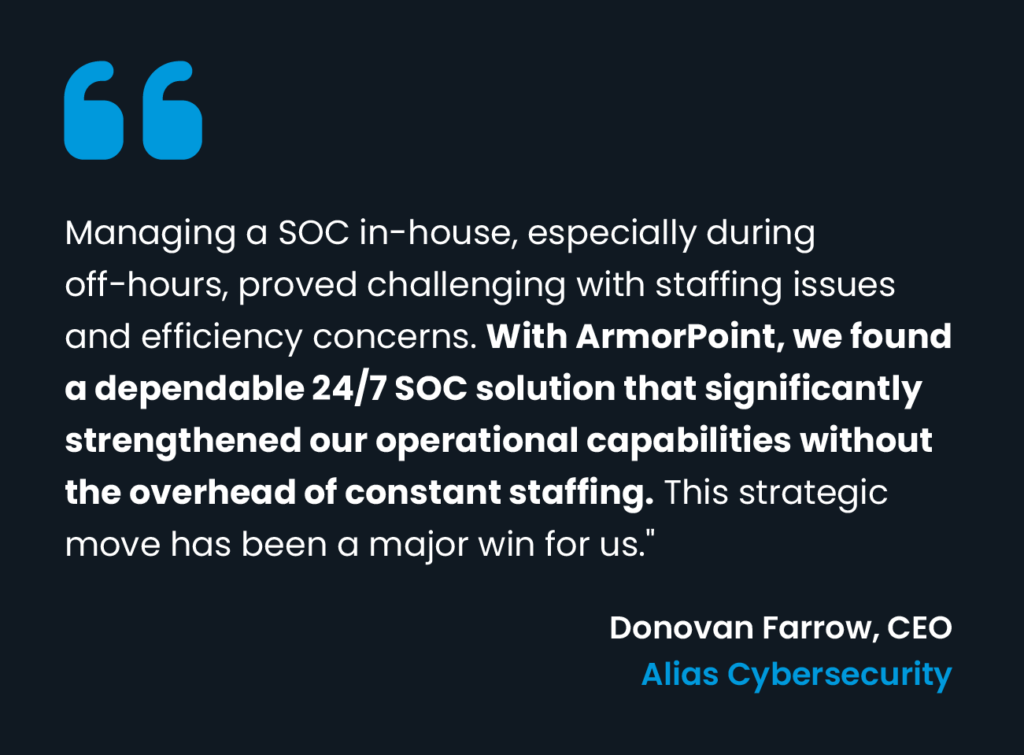
Augmenting your team by outsourcing SOC services can provide additional support such as 24/7 coverage and extra monitoring capabilities. This approach not only extends your team’s capabilities but also enhances vigilance without adding to the internal team’s burden, allowing them to focus more on strategic security tasks rather than continuous alert monitoring.
Why Choose ArmorPoint Managed SOC to Alleviate Alert Fatigue?
Choosing ArmorPoint's Managed SOC to combat alert fatigue brings several distinctive benefits that set it apart in the cybersecurity landscape:
- US-Based SOC Team: ArmorPoint's SOC team operates entirely within the United States, offering relentless 24/7/365 monitoring and support. This ensures not only timely and effective responses to threats but also adherence to the highest standards of communication and security compliance.
- Predictable Pricing: With ArmorPoint, financial planning for cybersecurity becomes simple and predictable. Our transparent pricing models eliminate surprises, allowing businesses to budget with confidence and focus on their core operations without financial anxiety.
- Mobile App: ArmorPoint enhances flexibility and responsiveness with a mobile app that allows for on-the-go threat detection and response. This tool ensures that you stay informed and in control of your cybersecurity posture, no matter where you are, providing real-time alerts and the ability to manage incidents directly from your smartphone.
- Proven Track Record: ArmorPoint stands proven by its performance. Our clients consistently report significant reductions in alert fatigue and substantial improvements in their overall security posture. These successes are a testament to the comprehensive nature and effectiveness of our managed services.
Together, these features make ArmorPoint's Managed SOC an optimal choice for organizations looking to enhance their cybersecurity measures while alleviating the stress and overload often associated with alert management.
Conclusion
While alert fatigue poses a significant challenge in cybersecurity, it is not insurmountable. With strategic measures and the support of a Managed SOC provider like ArmorPoint, organizations can effectively mitigate this issue, enhancing both their security stance and the well-being of their SOC teams.
Ready to make your SOC operations more effective and your analysts more focused and less burdened by the weight of endless alerts? Explore ArmorPoint’s Managed SOC services today.