
Vulnerabilities are like hidden fault lines waiting to shift; when they do, the effects can be catastrophic for any organization. That’s why effective vulnerability management isn’t just a defensive tactic in today’s digital landscape; it's a fundamental component of a comprehensive, proactive cybersecurity strategy.
What is Vulnerability Management?
Vulnerability management is the systematic process of identifying, assessing, prioritizing, and remediating security vulnerabilities in an organization’s systems and software. This proactive measure is vital for minimizing the window of opportunity for attackers and is a fundamental component of any cybersecurity strategy.
Vulnerabilities vs. Threats vs. Risks
When developing a risk-based vulnerability management program, it’s essential to know the key differences between vulnerabilities vs. threats vs. risks.
- Vulnerabilities are the weak spots in your systems and applications that attackers can exploit.
- Threats are potential or actual entities that can exploit vulnerabilities to cause harm.
- Risks are the potential consequences and impacts of these threats being realized.
Core Components of a Vulnerability Management Program
Each component of your vulnerability management program serves a distinct and critical function in safeguarding your organization. These core components include:
Cybersecurity Policy Development
Begin with a blueprint. Your vulnerability management policy should outline roles, define responsibilities, and establish procedures for a systematic response to vulnerabilities, forming the basis of your risk-based vulnerability management strategy.
Asset Management
Knowledge is power. Cataloging your assets—knowing what they are, where they are, and their value to your organization—is the first step in protecting them. This inventory is dynamic, evolving with your organization’s growth and technological adoption.
Vulnerability Scanning
Employ cutting-edge vulnerability management tools to perform continuous, automated vulnerability scans across your networks, applications, and systems. This isn’t a one-and-done deal; it’s a perpetual cycle of seeking out and identifying new threats before they can act.
Automated and Manual Penetration Testing
Automated vulnerability scanning efficiently identifies known vulnerabilities, while automated penetration testing assesses system defenses through simulated attacks. Manual penetration testing, conducted by ethical hackers, complements these automated methods by uncovering complex security weaknesses that automated tools may overlook. Both automated and manual penetration testing are crucial for a comprehensive vulnerability management program, ensuring a robust defense against various security threats.
Breach and Attack Simulations
Regularly scheduled fire drills for your cybersecurity protocols, Breach and Attack Simulations test how well your organization can handle an attack, adjusting tactics as needed in a controlled environment to avoid real-world catastrophes.
Risk Assessments
This is where your vulnerability management gets strategic. Assessing the risks associated with identified vulnerabilities allows you to prioritize your responses based on potential impact, directing resources where they are most needed.
Patch Management
The final link in your defensive chain, effective patch management, ensures that identified vulnerabilities are not just acknowledged but are actively remediated through timely updates.
What Are the Stages of Vulnerability Management?
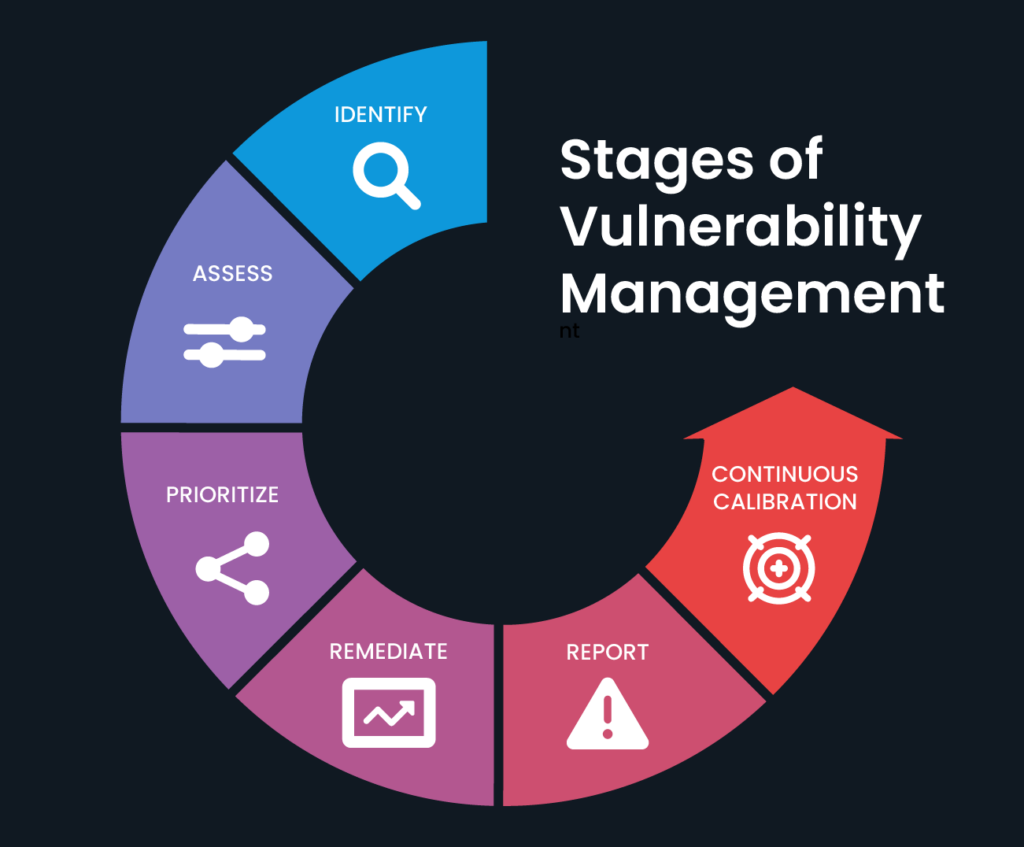
The stages of vulnerability management lifecycle represent a cyclical and continuous process designed to strengthen and adapt your cybersecurity defenses over time. This six-step process includes identifying, assessing, prioritizing, remediating, reporting, and continuously recalibrating vulnerabilities to ensure a resilient security posture.
- Identify
- The initial stage involves identifying all potential vulnerabilities within the system, which could be as simple as outdated software or as complex as a misconfigured network.
- Assess
- Each identified vulnerability is then analyzed to assess its severity and potential impact on the system.
- Prioritize
- Prioritization ensures that resources are allocated effectively, focusing first on vulnerabilities that pose the highest risk.
- Remediate
- The vulnerability remediation process involves the deployment of patches, software updates, or other measures to mitigate identified vulnerabilities.
- Report
- Documentation and reporting of the actions taken and their outcomes are essential for compliance, auditing, and continuous improvement.
- Continuous Recalibration
- A vulnerability management program is not a one-time fix but requires ongoing assessment and adjustment to adapt to new threats and vulnerabilities.
Conclusion
Implementing a strong vulnerability management program with a focus on risk-based vulnerability management and effective vulnerability remediation is essential for maintaining a resilient security posture. By following the stages outlined and using the right vulnerability management tools and strategies, organizations can protect themselves against potential threats and minimize risks.
For those looking to further enhance their security posture, explore ArmorPoint’s Vulnerability Management solutions today.
About ArmorPoint
ArmorPoint, LLC is a managed cybersecurity solution that combines the three pillars of a robust cybersecurity program — people, processes, and technology — into a single solution. Designed by cybersecurity experts, ArmorPoint’s cloud-hosted SIEM technology and extended detection and response capabilities enable businesses to implement a highly-effective, scalable cybersecurity program. With customizable pricing available, every ArmorPoint plan offers a dynamic level of managed security services that support the risk management initiatives of all companies, regardless of available budget, talent, or time. To learn more about ArmorPoint, visit armorpoint.com.