
Cybersecurity is about creating a dynamic, strategic framework that grows with your business. However, despite the complexity and evolving nature of cyber threats, many organizations still lag behind in updating their cybersecurity strategies. In fact, only 59% of businesses have revisited their cybersecurity strategies in the past two years. So, how can you build and maintain a mature cybersecurity program? And who needs to be included in the process? Let’s dive in.
What is a Cybersecurity Program?
A cybersecurity program is a holistic strategic initiative designed to protect and defend an organization against cyber threats. It involves a series of coordinated efforts that align cybersecurity measures with business objectives to ensure comprehensive threat protection and risk management. The benefits of a well-structured cybersecurity program extend beyond mere defense. It enhances business resilience, supports growth, and instills confidence among stakeholders about the security of their data and systems.
3 Steps for Developing Your Cybersecurity Program
When it comes to developing your own cybersecurity program, or recalibrating the one currently established, we suggest following three simple steps.
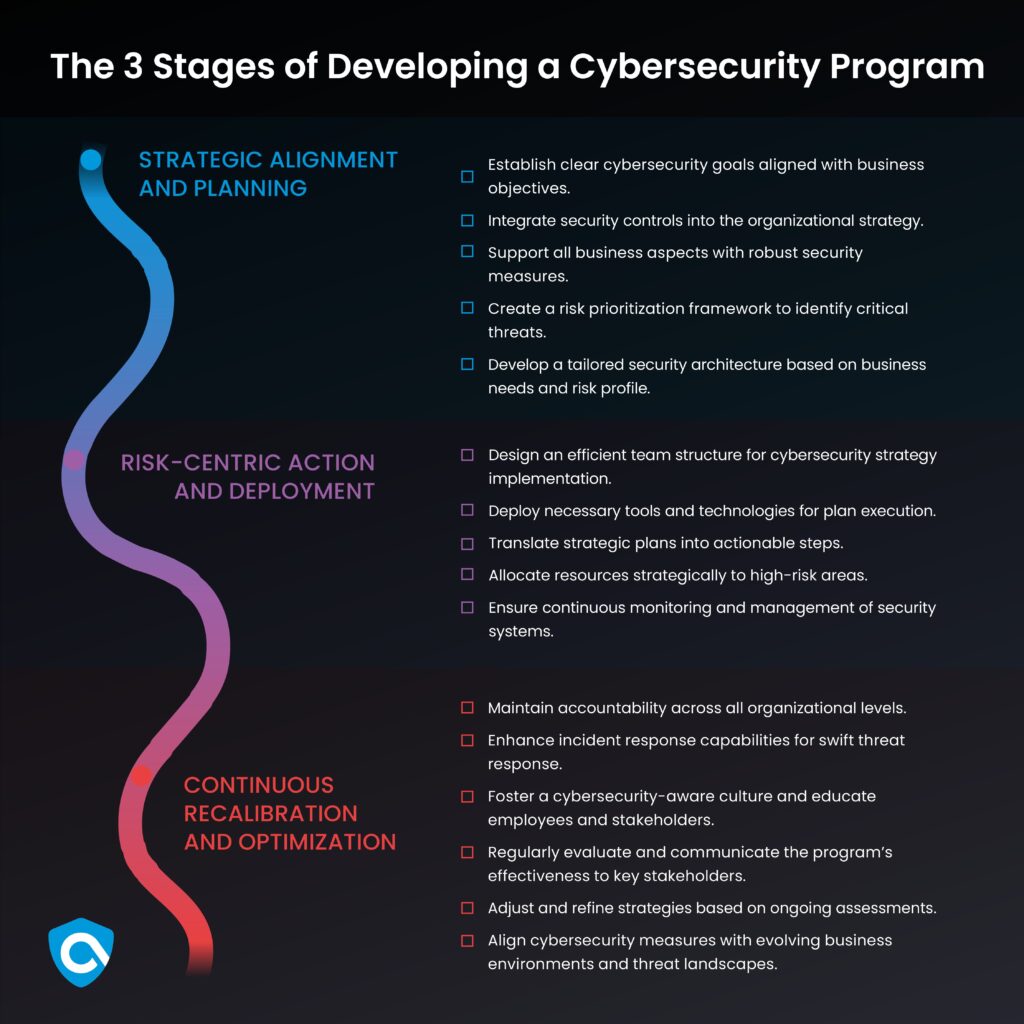
1. Strategic Alignment and Planning
The foundation of a successful cybersecurity program is its alignment with your organization's overall business objectives. This ensures that cybersecurity measures facilitate rather than hinder your business operations.
2. Risk-Centric Action and Deployment
With a strategic plan in place, the focus shifts to implementing these strategies by prioritizing and mitigating risks efficiently. During this phase is when security solutions will actually get deployed.
3. Continuous Recalibration and Optimization
As threats evolve, so must your cybersecurity strategies. Continuous improvement is crucial for staying ahead of potential security challenges, maintaining resilience against sophisticated cyber-attacks, and ensuring that security protocols evolve at the same pace as new vulnerabilities.
Who Needs to Be Involved with Building Your Security Program?
The development of a cybersecurity program extends beyond the IT department and requires the collaboration and input of various stakeholders across the organization. Each role contributes unique insights and capabilities essential for seamlessly integrating cybersecurity into your business's framework. Here’s an overview of the key players and their responsibilities that need to be included.
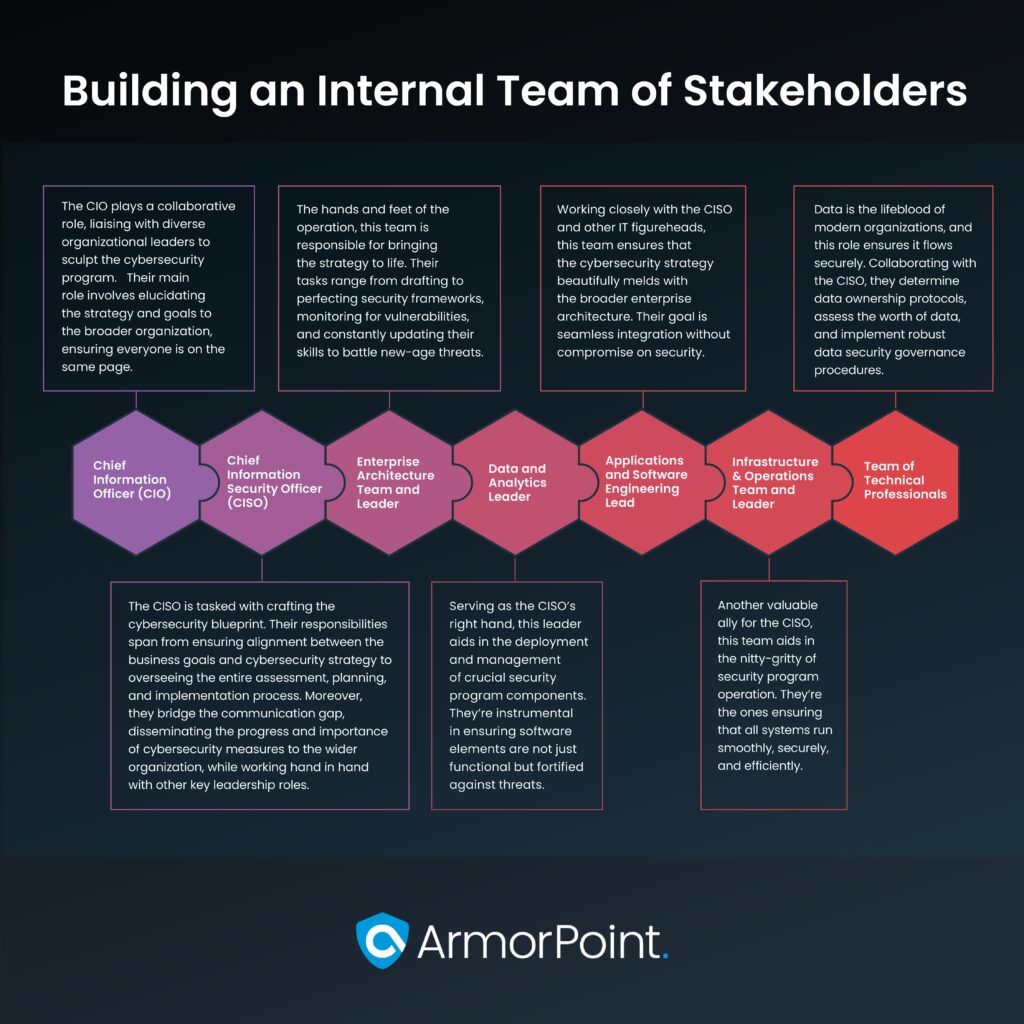
Involving these diverse roles ensures the cybersecurity program is robust, comprehensive, and integrated at every level, safeguarding your organization against cyber threats while still supporting your strategic objectives.
When to Leverage Internal vs. External Security Consultants to Build Your Cybersecurity Program
Knowing when to use internal resources and when to seek external help is key to building an efficient cybersecurity program. While internal teams can usually handle day-to-day operations and minor security tasks, external cybersecurity experts are crucial when conducting comprehensive risk assessments, undergoing specialized training, or managing complex security incidents that require specific expertise not available in-house.
Moreover, incorporating external security consultants can significantly enhance your cybersecurity strategy by bringing an unbiased third-party perspective. This is invaluable for identifying potential blind spots and areas of complacency within your internal teams. External experts can simulate advanced persistent threats and provide insights into the latest tactics used by cybercriminals, ensuring your defenses are robust and comprehensive. Their perspective helps ensure your cybersecurity measures not only meet but exceed the industry standards and adapt to evolving technologies and threats.
Conclusion
Building a mature cybersecurity program is crucial for modern businesses. It involves careful planning, strategic alignment, and continuous recalibration to adapt to new threats and technologies. Download the full Security Program Roadmap for a detailed guide on creating and implementing a strong cybersecurity program
About ArmorPoint
ArmorPoint, LLC is a managed cybersecurity solution that combines the three pillars of a robust cybersecurity program — people, processes, and technology — into a single solution. Designed by cybersecurity experts, ArmorPoint’s cloud-hosted SIEM technology and extended detection and response capabilities enable businesses to implement a highly-effective, scalable cybersecurity program. With customizable pricing available, every ArmorPoint plan offers a dynamic level of managed security services that support the risk management initiatives of all companies, regardless of available budget, talent, or time. ArmorPoint is developed and powered by Trapp Technology, Inc., a Phoenix-based IT managed services provider. To learn more about ArmorPoint, visit armorpoint.com.